
These are five of the most popular places to retire in Costa Rica, and they suit very different people. The Central Valley around Atenas has the mildest weather and the best hospitals. The Guanacaste coast has the beach and the easiest flights home.
Nosara has surf, yoga and quiet, but no hospital. Lake Arenal is cool and green. The southern Pacific is the lushest of the five, and the farthest from an international airport.
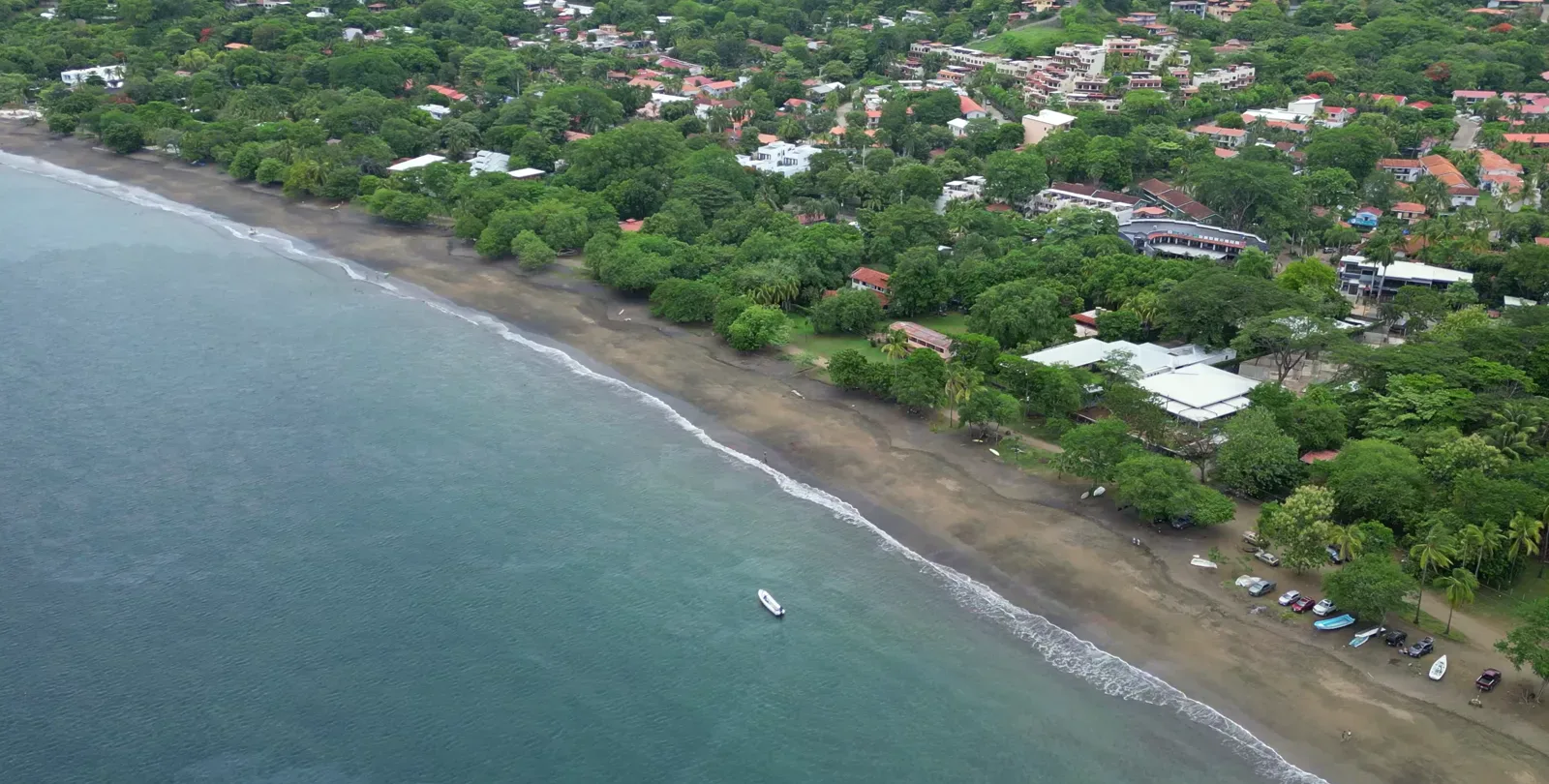
Playas del Coco on the Guanacaste coast, about 35 minutes from Liberia airport.
Table Of Contents
The Five Areas at a Glance
| Climate | Nearest international airport | Nearest hospital | Approximate asking prices, 3BR house | |
|---|---|---|---|---|
| Central Valley / Atenas | Warm days, cool nights, about 700 m up | SJO, about 40 minutes | Public and private hospitals within an hour | About $200,000 to $340,000 |
| Guanacaste coast | Hot, long dry season | LIR, 35 minutes (Coco) to 1 hour 15 minutes (Tamarindo) | Public and private hospitals in Liberia | About $270,000 to $375,000 in Coco |
| Nosara | Hot, dry season, green in the rains | LIR, about 2.5 to 3 hours | Public hospital in Nicoya, private in Liberia | About $255,000 to $350,000 inland (2BR). $500,000 and up in Guiones |
| Lake Arenal | Cooler, green, windy in the dry season | LIR, about 2 hours | Clinics in Tilarán. Hospitals in the Central Valley, about 3 hours | About $290,000 to $435,000 |
| Southern Pacific | Hot, very wet from May to November | SJO, about 3.5 hours | Public hospitals in Ciudad Cortés and San Isidro. Private in San José | About $280,000 to $530,000 |
Prices are asking prices from listings in 2025 and 2026. Use them to compare areas. Costa Rica has no public database of sold prices like Zillow in the US, and many deals close below the asking price. Drive times are approximate and change with traffic and weather.
Central Valley and Atenas
Healthcare is the reason to pick the Central Valley. The country’s largest private hospitals are here. Hospital CIMA is in Escazú and Hospital Metropolitano runs a 24-hour site in Lindora, Santa Ana. Public hospitals serve Alajuela and San Ramón. From Atenas, most of this is under an hour away on Route 27, the toll highway to the coast.
Atenas is about 700 meters above sea level, between San José and the Pacific. Days are warm and nights are cool, so many homes get by without air conditioning. Grecia and San Ramón, to the northwest, are higher at about 1,000 meters and run cooler. Escazú and Santa Ana, closer to the city, have more shops and more traffic.
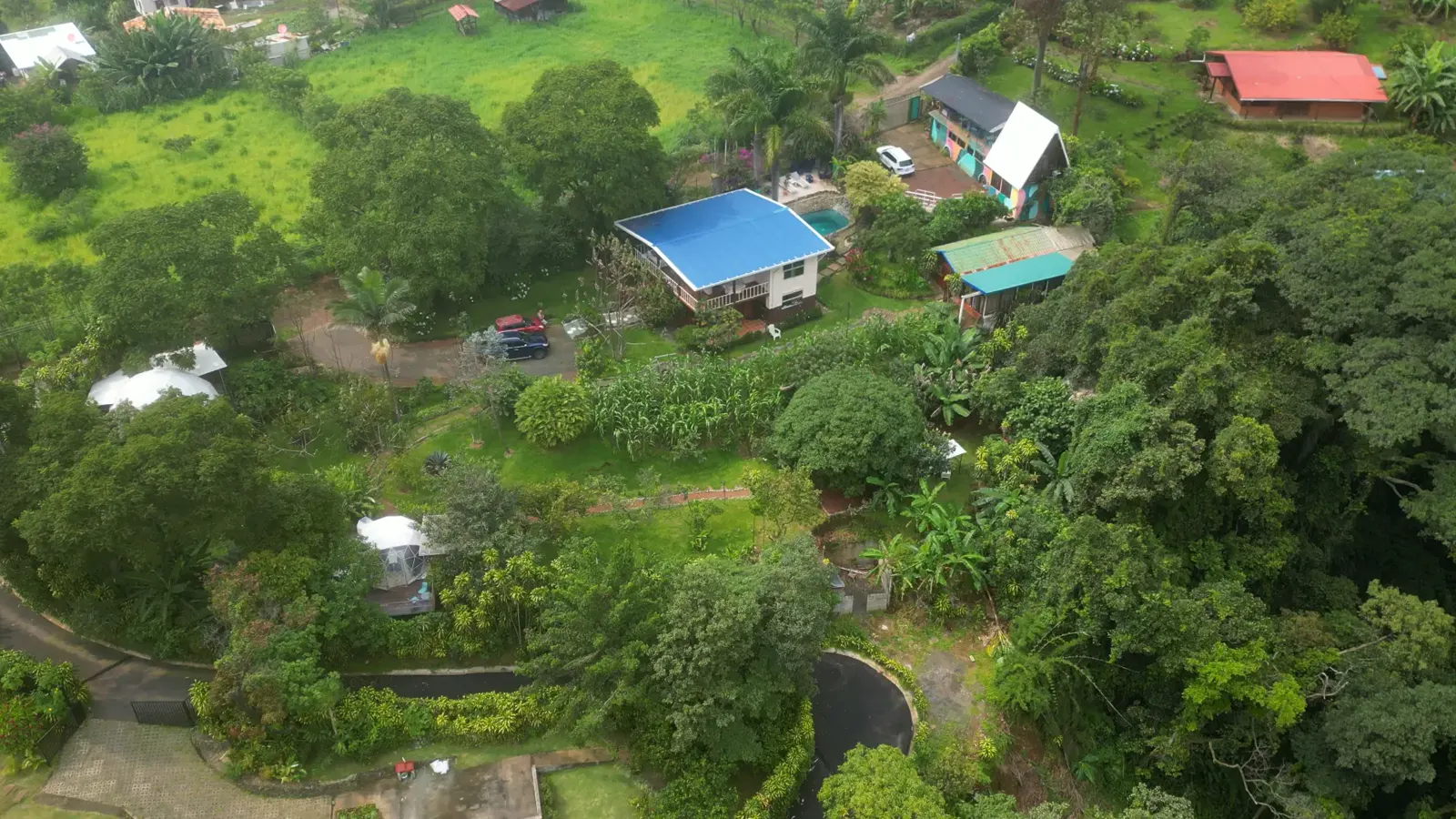
Hillside homes near Grecia, northwest of Atenas. The hills here stay green most of the year.
San José’s Juan Santamaría airport (SJO) is about 40 minutes from Atenas and has the most routes in the country. The nearest Pacific beaches, at Jacó and Herradura, are about an hour away. Traffic around San José is heavy, and a trip into the city can eat a morning.
Three-bedroom houses in and around Atenas were listed from about $200,000 to $340,000. New or high-end homes ran $490,000 to $735,000. Pick the Central Valley if a hospital close by matters more to you than a beach out the door.
The Guanacaste Coast
Flights are what set Guanacaste apart. Liberia airport (LIR) carried a record 793,075 passengers in the first quarter of 2026, up 12% on the year before. It has nonstop flights from many US and Canadian cities, including Air Canada from Vancouver and a nonstop from Chicago Rockford. Coco is about 35 minutes from the airport. Flamingo is about an hour and 10 minutes away, and Tamarindo about an hour and 15.
This is the area we know best, since this site started in Coco. It is the dry northwest corner of the country. The dry season runs from about December to April. Rain is rare in those months and the hills turn brown. Then the rains turn everything green again. Expect to run air conditioning for much of the year.
Private healthcare here has grown fast. Hospital Metropolitano runs a hospital in Liberia and a 24-hour site in Huacas, near Tamarindo and Flamingo. Clínica Bíblica opened a 24-hour hospital in Liberia in 2026. The public hospital in Liberia serves the whole province and is often full. For some specialist care, residents still go to San José.
Coco is a working beach town with a large, settled expat community, and you can do most errands on foot. Tamarindo is busier, with surf and nightlife. Flamingo is quieter and mostly condos. Our Tamarindo real estate guide and our Playa Hermosa vs Ocotal vs Coco comparison go deeper on each.
Newer two- and three-bedroom houses with pools in Coco were listed from about $270,000 to $375,000. Older local-style homes start around $100,000 to $150,000. Around Tamarindo, inland towns run about $250,000 to $400,000, and houses closer to the beach $500,000 to $950,000. If Coco is on your list, our guide to retiring in Playas del Coco covers it in detail.
Nosara
Nosara has no hospital, and that is the first thing to weigh. The town has a public clinic and a few private clinics. The nearest public hospital is in Nicoya, and the nearest private hospitals are in Liberia, about 2.5 to 3 hours away. Liberia is also the closest international airport.
Nosara is a small surf and yoga town on the Nicoya Peninsula, with Playa Guiones at its center. Many roads near Guiones are still gravel and get dusty in the dry season.
The Nicoya Peninsula is famous as a Blue Zone, a place where people live unusually long lives. Research published in 2023 found that edge belonged mostly to people born in the early 1900s and has faded for younger generations. The long-life story is about the past. Choose Nosara for how it lives today.
Two-bedroom houses inland, about 10 minutes from Guiones, were listed from about $255,000 to $350,000. Close to the beach in Guiones, prices start around $500,000. It works best for active retirees in good health.
Lake Arenal
Cool weather is the reason people choose Lake Arenal. Nuevo Arenal is about 620 meters up and Tilarán about 560 meters. Nights are cool and the hills stay green. From about December to April the wind blows hard, especially at the west end near Tilarán. Windsurfers come for it. Spend a windy week here before you buy.
Retirees live mostly around Nuevo Arenal on the north shore and Tilarán at the west end. The towns are small, with a handful of restaurants and bakeries and not much at night. Liberia airport is about two hours away.
Nuevo Arenal has a public clinic. Tilarán, about 35 minutes away, has a public health center and a private medical center. For hospital care, most residents go to the Central Valley around San José, about three hours away.
Listed houses ran from about $290,000 in Tilarán to about $435,000 in Nuevo Arenal. Lake Arenal is for retirees who would rather have a lake view and a sweater at night than a beach.
The Southern Pacific: Dominical, Uvita and Ojochal
The airport is the hard part of the south. SJO is about 3.5 hours away by road, on Route 27 and then the coastal highway. A southern international airport at Palmar Sur has been talked about for more than 20 years. As of mid-2026 it was waiting on a new master plan, with no construction date. Do not buy on the hope that it opens soon.
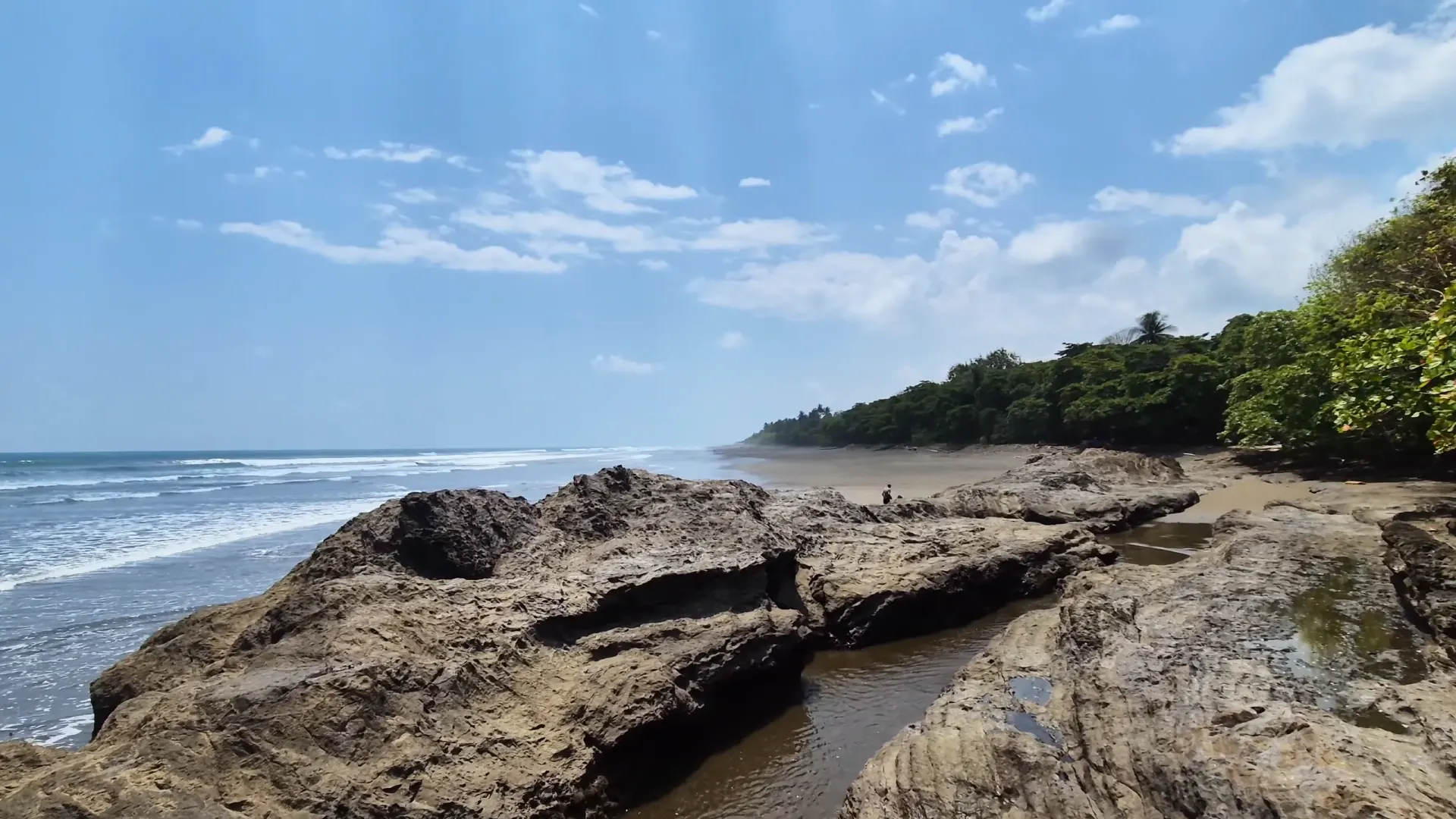
The beach at Dominical. The southern Pacific is much greener than Guanacaste, because it gets far more rain.
This stretch of coast, from Dominical south through Uvita to Ojochal, is often called the Costa Ballena. It gets far more rain than Guanacaste, often about twice as much. October is the wettest month and February the driest. It also brings mold, road washouts and power cuts.
Dominical is a small surf town. Uvita is the service center, with banks, supermarkets and a weekly farmers market. Ojochal has a French-Canadian community and is known for its restaurants.
Healthcare nearby is public. There is a public hospital in Ciudad Cortés, south of Ojochal, and a larger one in San Isidro de El General, over the mountains. There are private clinics in the area. For a private hospital, residents drive to San José.
Three-bedroom houses in Ojochal were listed from about $280,000 to $530,000. In Uvita, most were around $470,000 to $500,000. The south rewards people who love jungle and wildlife and rarely need to fly.
Residency, Healthcare and Taxes
These follow national rules, so they work the same in all five areas. The figures below are as of November 2026.
| Rule | What it means for retirees |
|---|---|
| Pensionado residency | A lifetime pension of at least $1,000 a month. Social Security counts. |
| Rentista residency | At least $2,500 a month in steady income, guaranteed for two years, or a $60,000 deposit in a Costa Rican bank |
| Inversionista residency | An investment of at least $150,000, for example in a home. The minimum was cut from $200,000 in 2021. |
| Renewal | Temporary residency lasts up to two years and is renewed. After three years you can apply for permanent residency. |
| Public healthcare (CAJA) | Residents must join. You pay a share of the income you declare, often around $120 to $150 a month on a $1,000 pension. Falling behind can block your renewal. |
| Income tax | Costa Rica only taxes income earned inside the country, so a foreign pension is not taxed here. |
| Buying property | Foreigners have the same ownership rights as Costa Ricans and do not need residency to buy. Beach land in the maritime zone has its own rules. |
One change to watch. In September 2026 the government sent Congress a bill for a 15% tax on residents’ foreign interest, dividends, rents and capital gains. It does not tax pensions, and it had not passed as of November 2026. Ask a tax advisor how it could affect you. For ownership rules, see our FAQ on foreign ownership. Confirm residency numbers with a Costa Rican immigration lawyer before you file.
How to Choose
- Rent before you buy. Spend a few months in your top area, and try more than one. A town that feels perfect for a week can feel different by month three.
- Visit in the rainy season. September and October show you the worst of the weather, the roads and the power. If you still like it then, you will like it in January.
- Time the drive to the hospital. Drive it yourself, at night if you can.
- Count the trips home. If you fly back often, Coco and Atenas save hours on every trip. Nosara and the south add a long drive at each end.
- Check water and title before you pay a deposit. Water supply is a real issue in parts of Guanacaste. Your lawyer should check this and the title as part of due diligence.
Canadians should also read our guide to moving to Costa Rica from Canada, which compares a snowbird winter with a full move.
Frequently Asked Questions
Where is the best place to retire in Costa Rica?
For healthcare and a mild climate, the Central Valley around Atenas. For the beach and direct flights to the US and Canada, the Guanacaste coast around Playas del Coco. Nosara, Lake Arenal and the southern Pacific suit retirees who want a quieter life and can live farther from a hospital.
What is the cheapest place to retire in Costa Rica?
Of these five areas, the lowest asking prices were for older local-style homes near Coco, from about $100,000 to $150,000. Typical three-bedroom houses around Atenas started near $200,000. Guiones in Nosara and Uvita cost the most.
How much income do I need to retire in Costa Rica?
The pensionado residency asks for a lifetime pension of at least $1,000 a month. The rentista residency asks for $2,500 a month for two years, or a $60,000 deposit in a Costa Rican bank. Buying a home worth $150,000 or more can qualify you as an investor. These were the figures as of November 2026.
Which part of Costa Rica has the best healthcare for retirees?
The Central Valley. The largest private hospitals, including CIMA in Escazú and Hospital Metropolitano, are near San José. Liberia in Guanacaste now has two private hospitals as well, Hospital Metropolitano and Clínica Bíblica.
Is Nosara still a Blue Zone?
The Nicoya Peninsula is still called a Blue Zone. Research published in 2023 found the long-life advantage belonged mostly to people born in the early 1900s and has faded for younger generations.
For walking tours of Dominical, Uvita, Grecia, Nuevo Arenal and Playas del Coco, visit our sister site Sights and Sounds.