
Buying property in a new country raises a lot of questions. This guide answers the ones foreign buyers ask most often about Playas del Coco and the wider Guanacaste coast, from who can own what, to closing costs, taxes, financing, and the rules around beachfront. The figures reflect current Costa Rican rules as of early 2026.
This page is general information, not legal or tax advice. Rules and figures change, and every property is different. Confirm the specifics for your situation with a Costa Rican attorney and accountant before you buy.
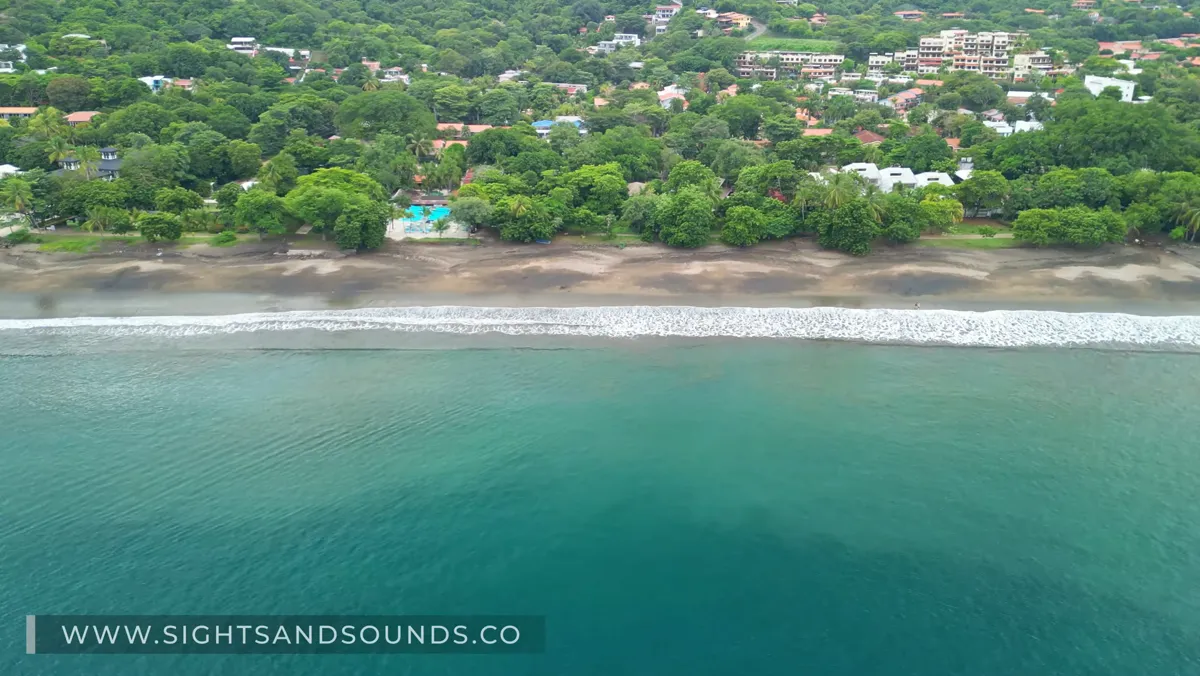
Ownership & Eligibility
Can foreigners own property in Costa Rica?
Yes. Foreigners have the same property rights as Costa Rican citizens. You can own titled property outright, in your own name, with no residency or citizenship requirement. Ownership is registered in the national registry, the same as it is for locals. This right is set in Article 19 of the Costa Rican Constitution.
The one exception is the Maritime Zone. The first 200 meters inland from the high-tide line is regulated coastal land. The first 50 meters are public and cannot be owned by anyone. The next 150 meters are concession land rather than freehold. A concession is a lease from the municipality, typically for a term of up to 20 years, and it is usually renewable. At renewal the municipality and the tourism board (ICT) can adjust the concession under the local zoning plan if better public beach access is needed. In practice this is rare. It is why concession property carries more complexity than titled property.
For most buyers in Playas del Coco this rarely matters. Coco, Playa Hermosa, and Ocotal all have a wide range of freehold homes and condos just outside the maritime zone, within walking distance of the beach. Developments tend to cluster just outside the zone for exactly this reason. They carry less complexity and no risk of concession alteration. Unless you are buying literal beachfront, you are almost always looking at standard titled property.
Do I need residency to buy property?
No. Property ownership and immigration status are separate in Costa Rica. You can buy and close on a home while in the country on a standard 90-day tourist entry. There is no residency or citizenship requirement to own titled property. In fact, the purchase can work the other way around. The property you buy can often be used to qualify for residency.
Can buying property get me residency in Costa Rica?
Often, yes. Costa Rica has an investor residency category called Inversionista. A qualifying investment earns temporary residency for two years, with a path to permanent residency after that. Buying property is the most common way foreigners meet it, because the home you were going to buy anyway can double as the qualifying investment.
The investment must be registered in your own name in the National Registry. Real estate is the usual route, but registrable movable assets also count. Cars, motorcycles, and boats registered in your name can be applied toward the total. This helps if your property alone does not reach the threshold.
One caution if you use vehicles to make up the difference. They are valued at the government's book value, and that value falls every year as the vehicle depreciates. The investment has to be maintained for the full two-year residency term. If you land right on the threshold and a vehicle depreciates, you can drop below it. Aim comfortably above the minimum rather than exactly at it.
As of early 2026 the minimum investment is $150,000. That figure was a temporary reduction from an earlier $200,000, and it is subject to change. Confirm the current threshold with a Costa Rican immigration attorney before you buy anything with residency in mind.
Should I own in my own name or through a corporation?
A corporation was the default a few years ago. That advice has tapered. For a single owner it is often simpler and cheaper to hold property in your own name.
A corporation still makes sense in specific cases. It helps with estate planning, with multiple owners who need defined shares, and as a liability shield that separates the property from you personally. If you go that route, the SRL (Limitada) is now the common choice for a simple property hold. It is simpler than the S.A. and does not require a board of directors.
The reason the benefit has tapered is cost. A corporation is not free to keep.
- There is an annual corporate tax owed every January whether the company is active or not. For an inactive company that holds a home it runs around ₡69,000, roughly $130 a year. Miss it for three years running and the company is dissolved automatically.
- If the corporation has a bank account, the bank now asks for robust annual paperwork. Income statements, shareholder declarations, and monthly account fees add up. Budget over $500 a year for this alone.
- As a non-resident, making changes to the corporation online requires an attorney to act under power of attorney. Something as routine as updating an owner's passport on file runs $100 to $150 each time.
None of that is a reason to avoid a corporation when you genuinely need the protection. It is a reason not to default to one out of habit. There is also a residency angle. If you plan to use the purchase to apply for Inversionista residency, the property has to be in your personal name. See buying for residency.
The right answer depends on your goal. Decide it with an attorney before closing.
Do I have to be in Costa Rica to close?
No, not strictly. You can grant your attorney a special power of attorney and they can sign the transfer deed for you. If you sign that power of attorney outside Costa Rica, it needs to be apostilled or authenticated at a Costa Rican consulate before it is valid here.
That said, here is what we recommend. Be in your home country when your funds are wired to escrow. International transfers of this size can trigger bank holds or compliance questions, and it is far easier to sort those out with your own bank in your own time zone. Then be in Costa Rica for the closing itself. If anything needs a signature, a correction, or a decision on the day, you are there to handle it rather than relaying it through a power of attorney from abroad.
Remote closing by power of attorney works, and plenty of buyers use it. But for a purchase this size, being present for the two moments that matter, the wire to escrow and the transfer of title, removes the most common points of friction.

The Transaction
What are the steps to buy property in Costa Rica?
The process is straightforward once you know the order. It runs in five stages.
- Offer. You make a written offer, often as a letter of intent, usually through your agent.
- Purchase-sale agreement. Once the price is agreed, both sides sign an option or purchase-sale agreement. Your deposit, usually around 10 percent, goes into escrow at this point. It goes to a SUGEF-registered escrow company, never directly to the seller. The agreement should give you a defined due-diligence period and the right to walk away with your deposit back if something turns up.
- Due diligence. Your attorney verifies the title, any liens, the survey, taxes, and utilities. This typically takes 30 to 60 days.
- Closing. A notary drafts the transfer deed, both parties sign, and the funds release from escrow to the seller.
- Registration. The notary records the deed in your name at the National Registry.
One thing to prepare before you even make an offer: proof of your source of funds. Escrow companies in Costa Rica are regulated by SUGEF and are under heavy pressure to confirm that money entering escrow was legally obtained. They can ask you to document where your funds came from. If you are not ready for this, your money can sit frozen in escrow while you gather paperwork, and that delay can complicate or even derail the deal. Have your documentation ready in advance. That can be bank statements, sale records, or anything that shows where the money came from. Prepare it before you make the offer, not after your deposit is already sitting in escrow.
Do I need an attorney, and what do they do?
Yes. Every property transfer in Costa Rica has to go through a notary. A Costa Rican notary is not the same as a notary in the United States or Canada. Here a notary is a licensed attorney granted special authority by the state. They draft the transfer deed, authenticate it, and register it in your name at the National Registry. Their acts carry public faith, which means the law presumes them valid.
The buyer sources their own attorney, and this matters. Your attorney runs the due diligence on the property. They check the title, look for liens, confirm the survey and taxes, and advise you whether to proceed, renegotiate, or walk away. You want that person working for you, not for the seller. One notary can legally act for both sides, and it does happen, but as a buyer you are entitled to your own independent attorney and we recommend using one.
Language is rarely a barrier. Many attorneys across Costa Rica speak fluent English and work with foreign buyers every day.
If you need a recommendation, contact us. We can point you to attorneys in the Coco area who are reliable, responsive, and used to working with international buyers.
How does escrow work, and how do I move the money?
Escrow is what protects your money during the purchase. You never send funds directly to the seller or to an agent's personal account. Your money goes into an account held by a licensed escrow company registered with SUGEF, Costa Rica's financial regulator. The escrow company holds the funds and only releases them to the seller once the due-diligence conditions are met and the title transfers into your name. It protects both sides. The seller knows the money is real and sitting in escrow, and you know it will not be released until you actually own the property.
Your real estate agent will usually recommend reliable escrow companies. Contact us if you would like a recommendation. With a reputable escrow company the process on their end is smooth and routine.
The friction, when there is any, comes from your side of the wire. A six-figure international transfer gets scrutiny from both your sending bank and the receiving side under anti-money-laundering rules. If you are prepared, with your source-of-funds documentation ready and your bank aware the transfer is coming, it moves cleanly. If you are not, it can stall. This is why we suggest being in your home country when the funds are sent, so you can deal with your own bank directly.
What is due diligence, and how long does it take?
Due diligence is the investigation your attorney runs on the property before you close. It usually takes 30 to 60 days. This is the stage that protects you, and it is the reason your purchase agreement should give you the right to walk away with your deposit if something turns up.
Your attorney verifies several things:
- Title and ownership. Confirming the seller is the registered owner through the property's Folio Real at the National Registry.
- Liens and annotations. Any mortgages, judgments, or easements registered against the property.
- Survey. That the registered plano catastrado matches the actual boundaries on the ground.
- Municipal status. Property taxes paid, no municipal debts, and zoning that permits what you intend to do with the property.
- Utilities. Legal, documented access to water and electricity.
In Guanacaste, water is the one to watch. A property can have clean title, a correct survey, and everything else in order, and still have a water problem. Some properties were connected to water unofficially over the years. If the ASADA water association or the municipality later enforces the rules on those connections, the property can end up in legal limbo. These situations are sometimes resolved, but resolution can take years. Confirming a legal, official water connection, or an ASADA letter of water availability for a build, is one of the most important checks in this region.
The good news is that this is improving. Guanacaste is in the middle of continual infrastructure and utility expansion, and these water issues are becoming less common as the systems catch up. For current coverage of how the government is investing in infrastructure and easier living across the region, see our news section.
What is a Folio Real and a plano catastrado, and can I check a property myself?
These are the two documents that define a property in Costa Rica.
The Folio Real is the property's unique registration number at the National Registry. The first digit is the province. For anything in Playas del Coco, or anywhere in Guanacaste, it starts with a 5. The rest of the number identifies the specific property and the ownership rights on it.
The plano catastrado is the officially registered survey. It shows the exact boundaries, the area, and the location, and it has its own catastro number. During due diligence your attorney confirms the plano matches the physical property on the ground.
Once you are actually buying, verification is your attorney's job. They pull the registry records, check for liens, and confirm everything is clean before you close.
Earlier than that, in the research phase, the public property maps are a useful tool of your own. Costa Rica's National Registry records are public, and locally the Municipalidad de Carrillo, the canton Playas del Coco belongs to, runs its own cartographic viewer at visorcartografico.municarrillo.go.cr. It maps the canton's parcels over satellite and aerial imagery, with cadastral and land-value layers. You can look up a property and, just as importantly, see what surrounds it. The empty field next door tells a story. It might be segmented into lots ready for construction, which points to rising value over time. Or it might be farmland, which can bring livestock, odors, or other factors that hold value back. Knowing what is beside and around a property is part of judging it, and the public maps let you see that before you ever make a call.

Costs & Taxes
What are closing costs, and who pays them?
Budget roughly 3.5 to 4 percent of the purchase price for closing costs. As the buyer, these are yours to pay. They break down like this:
- Transfer tax: 1.5%. Charged on the higher of the sale price or the registered fiscal value.
- Registry stamps and fees: about 0.8%. National Registry, municipal, agrarian, and documentary stamps.
- Notary fees: 1 to 1.5%. Set by an official tariff, so they do not vary much between attorneys.
- VAT at 13% applies to the notary fee and the escrow fee, not to the whole purchase.
- Escrow fee. Usually a few hundred dollars up to around a thousand.
That is the whole closing sheet. Some estimates you will see run to 5 or 6 percent. Those usually include the agent commission, which the seller pays, not the buyer.
The agent commission is around 6 percent plus VAT, and in Costa Rica the seller pays it. It is already built into the list price. If two agents are involved, they split it. As a buyer you do not write a separate commission check.
A few things to budget for beyond the closing sheet:
- Corporation setup, if you choose to hold the property in a company.
- HOA dues. In a gated community or condo, confirm the account is current. A unit that is behind on HOA fees is worth flagging. Bringing those arrears current at closing can be a point of negotiation on price.
Everything here is customary rather than fixed by law, so the split can be negotiated. But the standard in Coco is what is above. The buyer covers closing costs, and the seller covers the commission.
How much is the property transfer tax?
The transfer tax is 1.5 percent of the property value, calculated on the higher of the sale price or the registered fiscal value. It is part of your closing costs, and the buyer pays it. See the closing costs breakdown for how it fits with the other fees.
How much is the annual property tax?
The annual property tax in Costa Rica is 0.25 percent of the property's registered value. You pay it to the local municipality, which for Playas del Coco is the Municipalidad de Carrillo. You can pay quarterly or in one annual payment, and it can be paid online through the municipality.
The value it is charged on is worth understanding. In general the registered value sits below market, which keeps the effective tax low. A sale changes that. When you buy, the transaction pins the registered value to your purchase price. Owners also file a property value declaration every five years.
There is one more way the value can change, and it can work in your favor. You can have the property formally assessed, which can raise its book value. A higher book value means a slightly higher tax, but it also strengthens the property as collateral if you ever want to finance against it or open a line of credit. That trade-off is worth weighing if borrowing against the property is part of your plan.
On a typical home this tax is modest. A quarter of one percent is low by North American standards, and it is one of the smaller lines in your annual ownership budget.
Is there a luxury home tax?
Yes, but it only applies to higher-end properties. It is called the solidarity tax. It kicks in when the construction value of a home passes about ₡143 million, which is roughly $280,000. Most standard homes and condos in Coco fall under that, so the average buyer never deals with it.
If your property does cross the line, the rate is small, between 0.25 and 0.55 percent of the total value, and it is filed with the tax authority once a year. Owning through a corporation does not exempt you from it.
If you are looking at luxury property and want to know exactly where it lands, your attorney or accountant can confirm it for your specific home.
Is there capital gains tax when I sell?
Yes. Costa Rica has taxed capital gains on property since 2019. The sale of property is taxed at 15 percent on the gain, meaning the profit between what you paid and what you sell for.
There are two important exceptions.
- If the property is your primary residence, the sale is exempt.
- If you owned the property before July 2019, when the tax came in, you can make a one-time choice to pay 2.25 percent of the total sale price instead of 15 percent of the gain. You take whichever is lower.
At closing, a 2.5 percent withholding is taken from the sale price as an advance on the tax, and it is settled when the seller files.
As a buyer this is a seller's concern today, but it becomes yours the day you sell. It is one more reason to keep good records of your purchase price and any improvements, since those reduce the taxable gain later.
What ongoing costs should I budget for as an owner?
Beyond the purchase, a handful of recurring costs make up your annual budget.
- Property tax. 0.25 percent of the registered value, payable quarterly to the Municipalidad de Carrillo.
- HOA dues, if you are in a community. These vary widely and track the level of service, security, and amenities. A smaller development like Las Palmas can run a couple hundred dollars a month. A full-service community like Pacifico can run upwards of $1,000 a month. More services and security mean higher dues.
- Utilities. These depend on how you live. A pool and air conditioning drive up electricity. A pool or garden drives up water. Before you buy, ask for the last 12 months of utility bills and look for anomalies. A steady unexplained draw can mean a water leak or an electrical fault, and you want to find that before it becomes your bill.
- Property management, if you are not here full-time. Managers typically charge a fixed monthly fee, plus a commission on any rental income. That fee usually does not include repairs and maintenance. The manager coordinates that work, but the costs are yours.
- Insurance. Homeowner and contents insurance is available. The national insurer INS is the main option, and more private insurers are entering the market as foreign ownership grows. Shop around on both price and reputation.
- Corporation upkeep, if you hold the property in a company. Budget the annual corporate tax and the bank and filing costs. See ownership structure.
Costs scale with how you live and where you buy. A simple freehold home with no pool and no HOA carries very little. A luxury condo in a full-service community carries more, in exchange for the services.
Should I buy in an HOA community or a freehold home?
Both work in Coco, and the right choice comes down to how involved you want to be and how often you are here.
An HOA community spreads the cost of shared maintenance and security across all the owners. You pay monthly dues, and in return the roads, landscaping, common areas, and security are handled for you. For an absentee owner this is convenient. Someone is watching the property whether you are in the country or not.
The downside is that you are handing control to a board. When owners are spread around the world and rarely present, a small group can end up running things. Most boards are fine. But cliques can form, decisions can start favoring a few owners, and in some cases there has been mismanagement or outright fraud with the accounts and service contracts. Before you buy into a community, pull the HOA minutes and budget and read them. Look for anomalies in the spending and in how decisions get made. A healthy HOA has nothing to hide.
A freehold home usually costs less to hold, with no monthly dues. The trade-off is that security and upkeep fall entirely on you. Freehold homes in this region are typically built with stronger physical security in mind, following crime prevention through environmental design (CPTED) principles. Think iron grilles on windows, a secured garage, good lighting, and layered measures rather than a single lock. That is the real trade for freedom from HOA dues. You take on the maintenance and the security yourself, and you build the property to handle it.
Neither is better across the board. An HOA buys you convenience and shared security at a monthly cost and some loss of control. Freehold buys you lower costs and full control at the price of doing the work yourself.

Financing
Can a foreigner get a mortgage in Costa Rica?
In practice, most property in Costa Rica is bought with cash. Local banks do offer mortgages, but for a non-resident they are slow, heavy on paperwork, and usually require residency and a local income history. Interest rates run higher than what buyers are used to in North America. For most foreign buyers, a traditional Costa Rican bank mortgage is not the route they take.
What financing options are there if I am not paying all cash?
Two routes are realistic for a foreign buyer.
Seller financing is common in Costa Rica. It is most likely when a seller has held a property through strong appreciation and would rather cash out slowly, taking a monthly income, than collect the full amount at once. Terms are negotiated directly between buyer and seller. It can be a straightforward way to close when bank lending is off the table.
Private lenders also operate here, offering property-backed loans. The rate and term are far more aggressive than a bank mortgage. Expect higher interest and a shorter payback window. That makes private lending better suited to bridging a gap than funding a whole purchase. If you are short on the final portion of the price, say the last 20 percent, a private loan can close it.
For that kind of gap, a home equity line of credit in your own country is usually the better tool. The rate is lower and the terms are friendlier than anything available locally. Where possible, arrange financing at home before you buy, and keep local private lending as a backup.
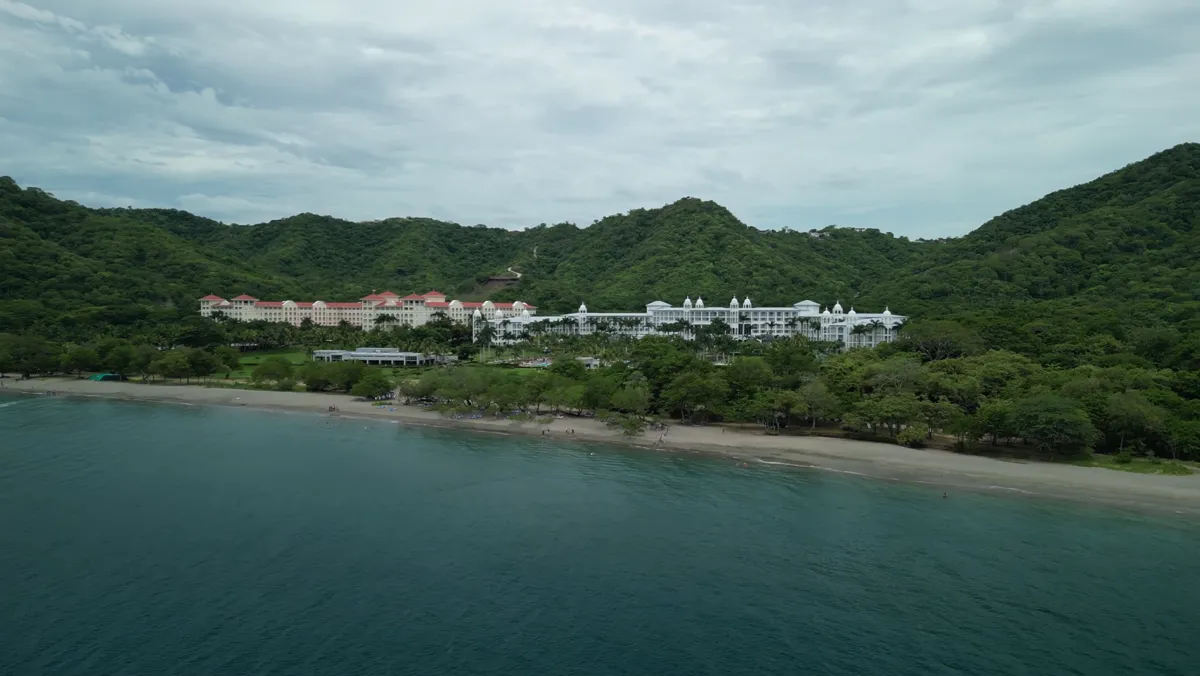
Beachfront & Protection
Can I own beachfront property? What is the Maritime Zone?
Costa Rica protects its coastline through the Maritime Zone, the first 200 meters inland from the high-tide line. This land is not sold as freehold. It works differently from the rest of the country.
The first 50 meters are public. No one can own or fence them, and the strip stays open to everyone.
The next 150 meters are the concession zone. Property here is held as a concession, which is a lease from the municipality, typically up to 20 years and usually renewable. You do not own the land outright. You hold the right to use it under the terms the municipality and the tourism board set.
For a foreign buyer there is an added restriction. Under Costa Rican law, a foreigner who has not lived in the country for at least five years cannot hold a concession. A company can hold one, but only if at least half of it is owned by Costa Ricans, and a concession company cannot transfer its shares to a foreigner. These rules are why concession beachfront is more complicated for foreign buyers, and why most developments in the Coco area sit just outside the zone on standard titled land.
You can see the concession system at full scale in the registered plans for the Marina del Coco, a 25-hectare marine concession held under the municipality. Read about the marina.
Some beaches carry a second set of rules. At Playa Grande, next to Tamarindo, much of the land behind the beach is inside Las Baulas National Marine Park, where building is tightly limited. Read our Tamarindo real estate guide.
Beachfront is workable if it matters to you, but go in understanding exactly what a concession is and is not. For most buyers, freehold property a short walk from the beach is the simpler and safer choice.
Is title insurance available, and do I need it?
Title insurance is available in Costa Rica through a few international providers, but it is not commonly used. Most buyers rely instead on two things: a thorough title search by their attorney during due diligence, and the National Registry itself, where ownership is recorded and backed by the state.
For a standard titled property with clean due diligence, most buyers are comfortable without a policy. Title insurance tends to make more sense on larger purchases, on complex transactions, or where a buyer simply wants the extra layer of protection and will pay for it.
The real protection for most buyers is the due diligence itself. A careful title search, done by your own attorney, catches the problems a policy would later pay out on. Getting that step right is what keeps your purchase safe.
See Costa Rica first
Get to know the country before you buy into it. Our sister site Sights & Sounds has travel videos from across Costa Rica, so you can explore the beaches, towns, and regions from home and arrive knowing where you want to be.
Explore Sights & Sounds